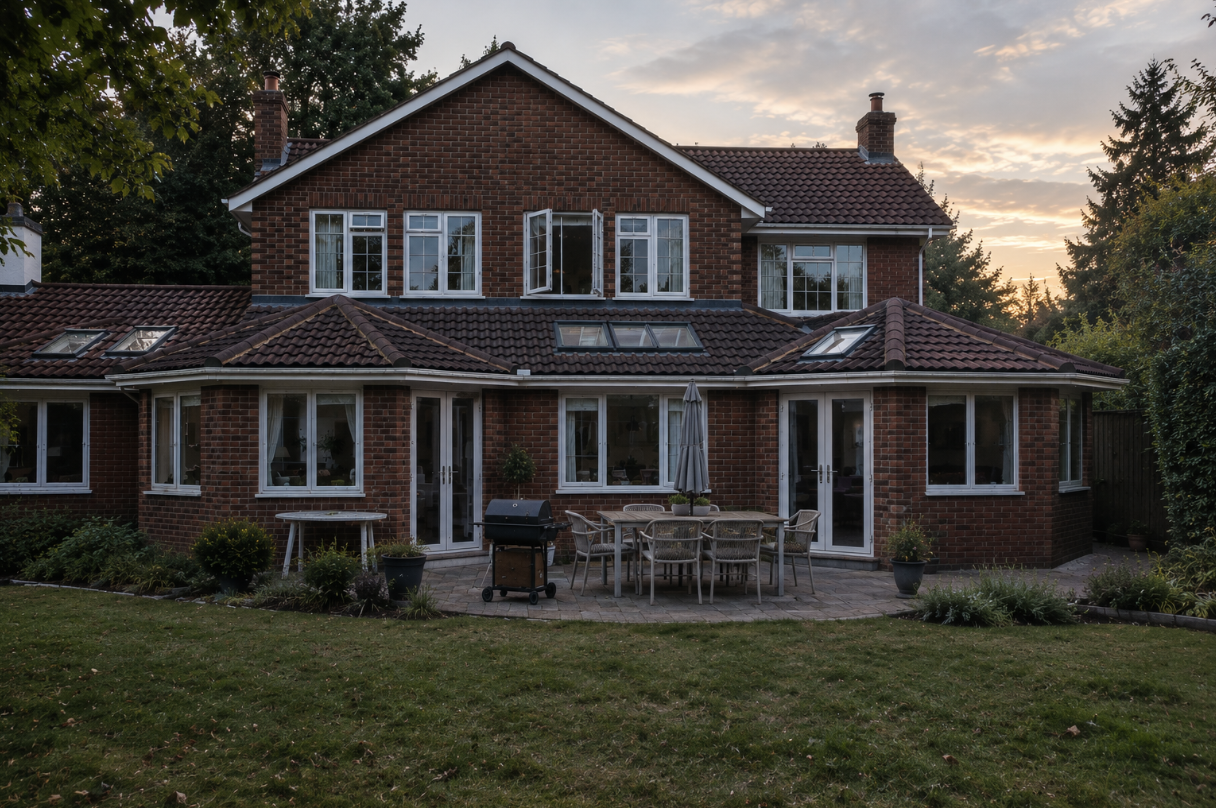
Godalming's mix of tightly packed Victorian terraces, interwar semis, and riverside cottages means there's no single answer to whether you can extend your house, it depends heavily on where in town you are. Before pricing up a kitchen extension or a two-storey side return, it's worth understanding how the local planning rules and the town's geography shape what's realistic.
Do You Need Planning Permission for an Extension in Godalming?
Many single-storey rear extensions fall under Permitted Development, meaning no formal planning application is needed, provided you stay within the size limits and don't extend forward of the principal elevation. Waverley Borough Council, the local planning authority covering Godalming, handles both full planning applications and Lawful Development Certificate requests if you'd rather have written confirmation before building starts.
The town centre complicates things. Godalming's conservation area covers much of the historic core around the High Street, Church Street, and Bridge Street, and reaches into several surrounding residential roads. Inside that boundary, permitted development rights are more restricted, a rear dormer or loft extension that would be automatic elsewhere can need full planning permission here, and work affecting one of the listed buildings along Church Street or the High Street needs listed building consent as well. It's worth checking the conservation area boundary before assuming a project counts as permitted development by default.
What the River Wey Means for an Extension
Godalming sits astride the River Wey, and parts of the town, particularly around Catteshall, Westbrook, and roads close to the water meadows, fall within a flood zone. If your property is in one of these areas, a flood risk assessment may be needed alongside your planning application, and your extension's floor levels and drainage will have to account for it. It's worth checking the Environment Agency's flood map for your postcode early, before a design is finalised, rather than discovering it partway through.
Which Godalming Properties Suit Which Extension
The Victorian and Edwardian terraces around Croft Road, Deanery Road, and the town centre tend to sit on narrow plots, which makes a side infill or a modest single-storey rear extension more realistic than a full wraparound. Further out, in Binscombe, Farncombe, and Frith Hill, interwar semis and detached houses generally have larger plots with more room for a double-storey rear extension or a bigger kitchen-diner addition. Properties backing onto the Lammas Lands or the river tend to carry the flood considerations above on top of whatever else applies to their age and style.
Frequently Asked Questions
How do I find out if my Godalming property is in the conservation area?
Waverley Borough Council publishes conservation area boundary maps on its planning pages, and we can also check this for you as part of an initial site visit before any design work begins.
Will my extension need a flood risk assessment?
Only if your property falls within one of the flood zones around the Wey or the water meadows. We check this early on so it doesn't hold up your planning application later.
How long does planning permission usually take in Godalming?
A standard householder application is typically decided within eight weeks of being validated by Waverley Borough Council, though conservation area or listed building consent cases can take longer.
If you're planning an extension in Godalming or a nearby town, take a look at our extensions page for examples of our work, or get in touch to talk through your project.